
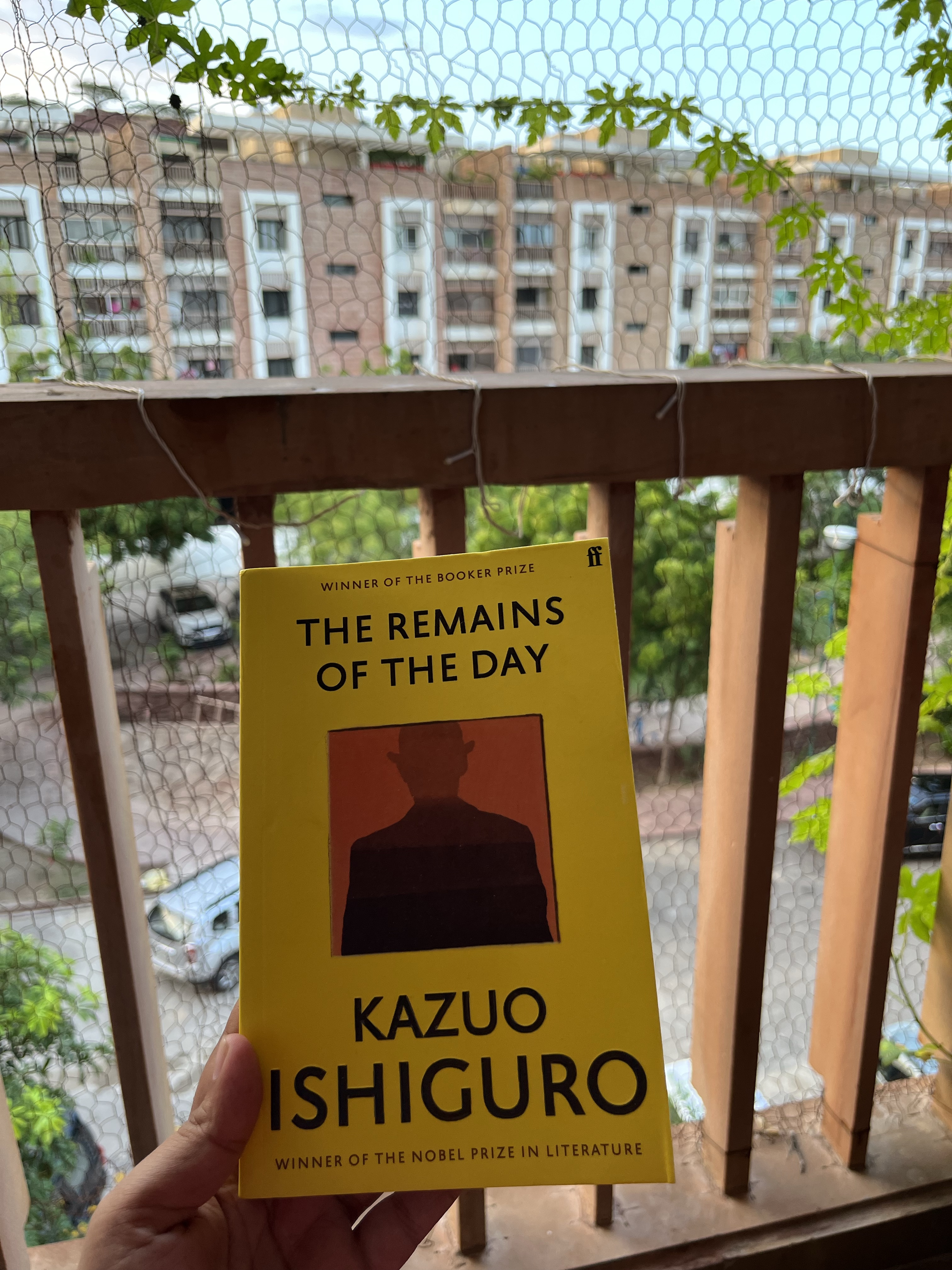
I have been fond of reading historical fiction since many years. It may be counted as my favourite genre too. While I have read few books of this genre based on India, USA, Ireland, Australia, the number of books I have read based on World War II outnumber all of the others combined. This year itself, out of the 12 books that I have read so far, 4 are based on World War II. The latest of this list is the literary treasure “The Remains of the Day” by the Nobel Prize winner Kazuo Ishiguro.
The book is a first person narration by a butler named Stevens, who served the house of Lord Darlington in England for a significant part of his service life. As we read, it is realised that Lord Darlington died some years back and the house is now owned by Mr Farraday, an American with a fairly different style and approach than the Englishmen. As Mr Farraday asks Stevens to go on a vacation for a week, Stevens sets foot on a Ford and drives to meet his long term staff member Miss Kenton. The book is narrated by Stevens in these seven days of his travel and in-between stays at different inns and cottages. It is here that Stevens recalls the many anecdotes regarding the visits and gatherings of eminent foreign policy makers in Darlington Hall that discussed important world affairs and were effective in influencing the course of actions of different countries.
The book is not a typical book based on Holocaust, depicting the sufferings of people, attrocities by others, but rather a bystander’s opinion who irrespective of the events occurring worldwide as well as in his house, considered his service, loyalty and dignity above everything else, even above the curiosity to know what is happening. It is written more like a poem. The beauty of the route Steven takes is explained like a painting, the inns he stays seem so cosy, and the pace with which the story unfolds is like a cascade of flowing water, that eventually meets a great lake of realisation.
Apart from the literary marvel, I really admire the variety of books written on World War II. They are all surrounded around the same topic, but each book unfurls how the even was influencing one particular person of a particular profession. And that’s what makes this genre amazing is that it gives one the perspective of how horrendous activities affect common people from different walks of life differently. These stories also gives the reader the thought that someone who might seem just another person in our daily life, such as a banker, a beautician, a cobbler, a teacher, all live an extremely common and complex life, and how if any unthinkable attrocities ever happen on society, how each one of these people are going to get affected similarly yet so differently. I wish there were more of such books on Indian freedom struggle depicting how the life of a common household got affected by the change in administration of such a huge country. These stories will allow one to connect more deeply and humanly with the people who lived in those times and understand that how important it is for the society to stand as one, allowing each one to live their own peculiar life.
 Aali Pant