As we grow up, the things that bring us thrill, such as going on an adventure, rafting on a wild river, hiking mountains often, swimming in rivers and lakes, attending concerts, dancing to the beats in a club, or anything wildly entertaining or fun, often take a back seat. Commitment towards relationships, taking care of others, and working towards your professional goals becomes primary. If you happen to have a child and above that happen to be the mother, it is even more unlikely that you would indulge in doing anything remotely close to adrenaline-rushing activities. In such moments of wishing to live those moments that you could just a few years back, come books to your rescue. Those countless pages of the lives of others, living a life that brings a fresh perspective to your routine life, such as a neurosurgeon struggling with his own terminal cancer and still trying his best to be a great doctor, tell you the strength of human will. The life of a woman in Korea, facing patriarchy silently in everyday chores and offices, reminds you of the similarity in the worlds we all live in. The group of women from different walks of life coming together for dinner on Thursdays and making sisterhood bonds, which many thought they weren’t worthy of. Or the many important judicial cases that tell about the slow and trying process of seeking justice, but eventually lead to the larger good of others in the future, when finally justice is delivered. With many such stories, my regular year of 2025 was transformed into a year of discovering lives, emotions, hardships, and strengths from 13 different books.
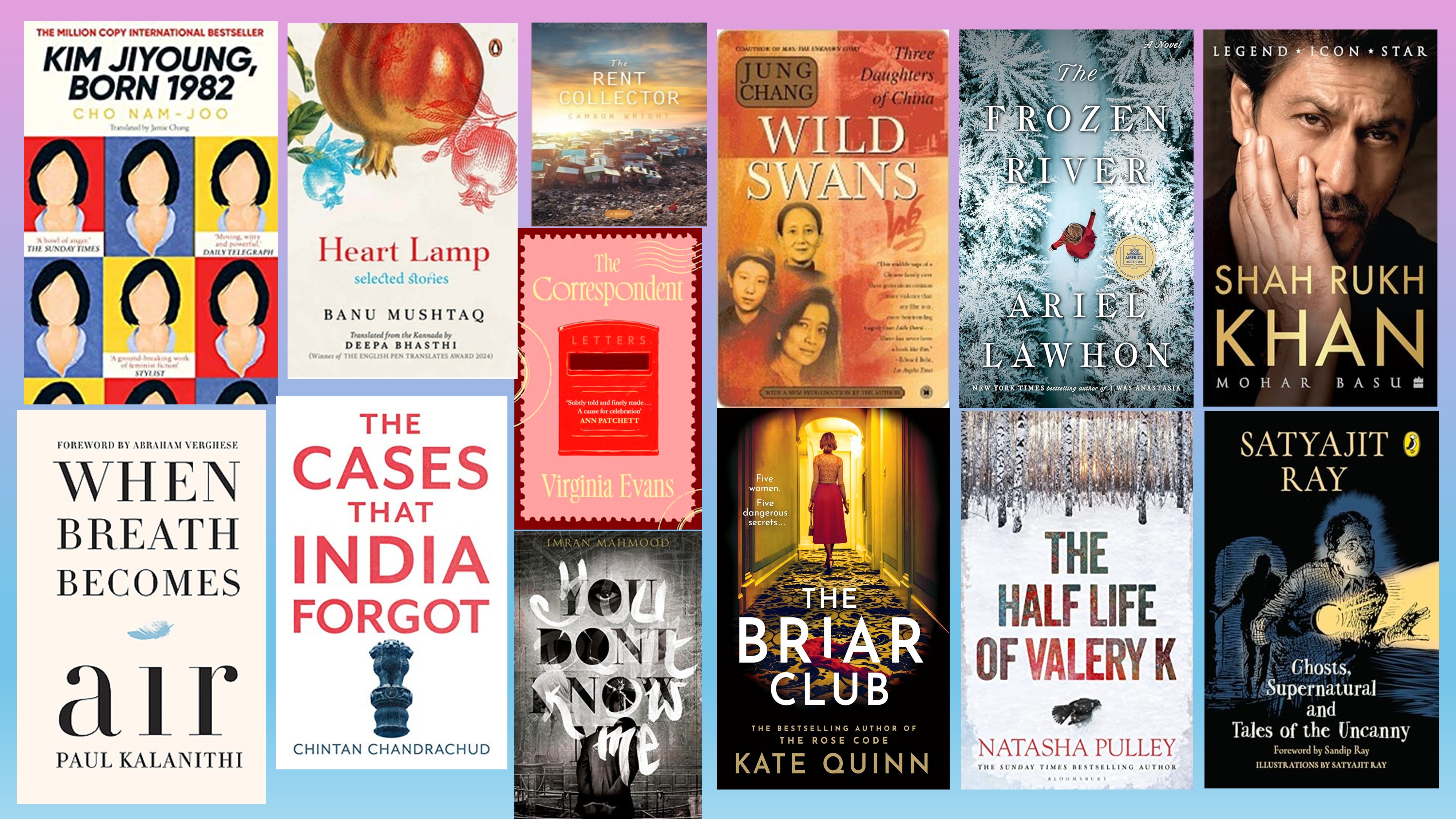
I started the year by reading Wild Swans by Jung Chang and was blown away by it. I have read countless books on World War II, but when I read Wild Swans, I realised the immense potential of reading books on China too. It is a well-written book from the perspective of a young girl who experiences the transformation of China from her grandmother’s era to her mother’s to her own. Next, I read “The Half Life of Valery K” by Natasha Pulley. The book is based on an episode similar to that of Chernobyl. I also read the “Heart Lamp” by Banu Mushtaq, which also won the International Booker Prize this year. The book was a major disappointment. I was bored to death by the same tone of the stories on Muslim women crushed under the burden of patriarchy and motherhood. While I agree that this is a reality for a section of women, I wish at least one strong woman character who would break her shackles and come out as an inspiration. I did read a book on Shah Rukh Khan, obviously! It was by Mohar Basu. Other books that I read were “You don’t know me” by Imran Mahmood, “The Frozen River” by Ariel Lawhon, “The Rent Collector” by Camron Wright, “When Breath becomes air” by Paul Kalanithi, a book by Satyajit Ray on Ghosts, Supernatural and the Uncanny, “The Cases that India Forgot” by Chintan Chandrachud, “The Briar Club” by Kate Quinn, and “Kim Jiyoung Born 1982” by Chon Nam-Joo. My absolute favourite of this year, though, was “The Correspondent” by Virginia Evans. It’s the story of a lady who, every day from 10:30 am, starts writing letters to her son, daughter, neighbour, friends, and everyone else she has to communicate with. Her primary mode of communication is not through calls, but through letters. Each chapter is a letter, either written by her or the one she received. The book also sparked a desire to write letters within me. How lovely it used to feel when you from nowhere received a letter hand-written specially for you by a dear one. I highly recommend reading it.
I hope to read at least 12 books in 2026, as that’s the least I can do to keep my soul alive.
 Aali Pant